This section will introduce the topic of pressure sensitive adhesive tape, providing a base understanding and setting the stage for the detailed exploration that follows.
What is Pressure Sensitive Adhesive (PSA) Tape?
Definition and Characteristics
Pressure sensitive adhesive (PSA) tape is a type of adhesive tape that sticks to surfaces through mild pressure without any need for a solvent or heat activation. Known for its versatility, PSA tape is characterized by its ability to adhere securely to a wide range of surface types, including paper, plastic, and metal.
The adhesive used in PSA tape is typically formulated from a mixture of elastic polymers, making it capable of retaining tackiness. This quality allows the tape to function effectively across both flat and irregular surfaces, ensuring a strong bond with minimal application pressure.
PSA tape boasts a distinct capacity to bond strongly with surfaces yet allows for clean removal in most cases. This particular feature makes it highly desirable in industries where both adhesion and seamless removal are essential.
Common Uses and Applications
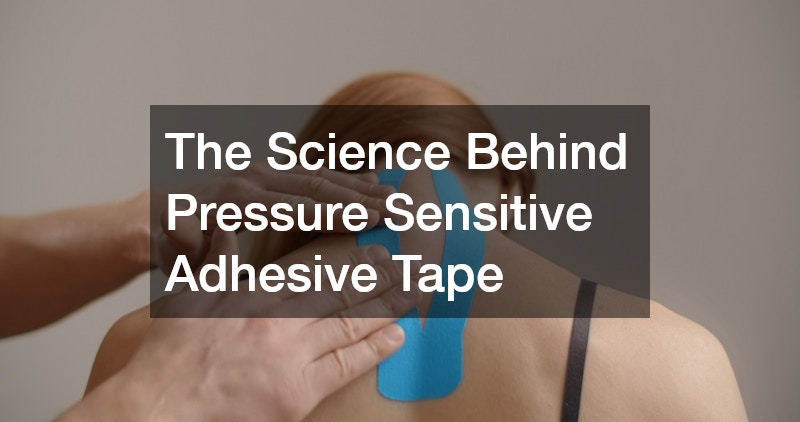
Pressure sensitive adhesive tape is found in various sectors, from medical to industrial settings, providing reliable bonding solutions. In the healthcare industry, it is used for bandages and assembling medical devices, where skin contact requires gentle yet firm adhesion.
In the automotive industry, PSA tape contributes significantly during assembly processes and performs essential functions, such as holding wire harnesses in place. Additionally, it serves a crucial role in electronics, securing components and providing insulation where traditional mechanical fasteners might not be suitable.
Other notable uses of PSA tape include packaging, where its strong yet removable adhesive ensures that boxes remain sealed without damaging contents. In households, it’s frequently employed for repairs and decorative purposes due to its ease of use and reliability across varied substrates.
How is PSA Tape Manufactured?
Key Components
The fundamental components of PSA tape include a backing material, the adhesive compound, and a release liner. The backing material could range from paper to film or even fabric, providing structural integrity and flexibility to the tape.
The adhesive component, formulated from elastomers and tackifying resins, consists of rubber or acrylic-based polymers known for their impressive cohesive strength and tack adhesion. A release liner typically accompanies PSA tape to protect the adhesive surface until it is applied.
This careful selection and formulation of materials ensures that PSA tape achieves the ideal balance between strength, flexibility, and ease of use, making it suitable for numerous applications. Each element plays a vital role in defining the performance characteristics of the final product.
Manufacturing Process
The manufacturing of PSA tape begins with the preparation of the adhesive compound by blending rubber or acrylic with tackifying agents. This mixture is then uniformly coated onto the backing material using precise machinery that ensures the adhesive layer’s consistency.
Once coated, the adhesive layer is cured or dried, ensuring optimal adhesion strength and durability. This is followed by a lamination process where a release liner is applied to protect the adhesive surface until the tape is utilized.
The final step involves cutting the tape into designated widths, packaging, and quality control to meet industry standards. Each stage emphasizes maintaining the tape’s performance reliability, ensuring its effectiveness across diverse environments.
What are the Adhesive Properties?
Tack and Peel Strength
Tack refers to the immediate bond strength exhibited when PSA tape initially contacts a surface, a critical factor for its utility. Peel strength, on the other hand, describes the force required to remove the tape from a surface, highlighting its ability to maintain adhesion under tension.
These properties are essential in determining the suitability of PSA tape for specific applications, particularly where immediate and robust attachment is necessary. Testing methodologies for tack and peel strength help ensure the tape’s reliability in real-world scenarios.
A high tack combined with adequate peel strength ensures that PSA tape remains firmly in place while also allowing for easy removal when needed. This balance is crucial for both temporary and permanent bonding applications across industries.
Cohesion and Shear Resistance
Cohesion refers to the internal strength of the adhesive layer, which maintains its structural integrity under stress. It is closely linked to the tape’s shear resistance, the ability to withstand sliding forces once applied.
High cohesion and shear resistance ensure that the tape remains effective under long-term loads and challenging conditions, such as high temperatures or sub-zero environments. This makes PSA tape a preferred choice where durability is required.
In applications such as electronics or automotive assembly, where components are subject to various forces, PSA tape provides the requisite balance of adhesion and stability. Its ability to resist external pressures contributes to the overall functionality of the products it is used within.
What Makes PSA Tape Different from Other Adhesives?
Comparison with Traditional Glues
Unlike liquid adhesives, PSA tape eliminates the curing or drying time, offering immediate bonding capabilities that enhance efficiency in manufacturing processes. This characteristic is especially beneficial in fast-paced environments where time is critical.
Traditional adhesives, while providing strong bonding, often involve lengthy setup times and potential cleanup. In contrast, PSA tape provides clean application without mess, making it a preferred choice for neat and efficient assembly or repair tasks.
Environmental Factors Affecting Performance
Environmental conditions such as temperature, humidity, and exposure to UV light can significantly influence the performance of PSA tape. Elevated temperatures can affect the adhesive’s tack, potentially weakening the bond over time.
Humidity levels also impact the effectiveness of PSA tapes, as moisture can either enhance or degrade adhesive properties. Outdoor environments require consideration of UV exposure, which may cause the tape to degrade if it lacks proper resistance.